
What to check before buying a vape became a more practical question when FiHP invited me to its packing line. Puff counts and flavour names attract attention online. At the bench, the task is much more concrete: get the right device into the right package and ready for the customer who ordered it.
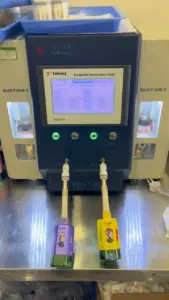
The accompanying footage shows people handling FiHP 600K 6in1 devices, working with protective wrapping and outer packaging, and passing items along the workflow. Watching those steps made me think about the details I would check before opening a parcel, especially if it contained more than one flavour configuration.
What the packing line can tell a buyer
Packaging is where a product becomes an identifiable item that can be stored, sent and checked against an order. It is also where a mismatch can become easy to overlook: a device may look familiar while its flavour group or nicotine option differs from the one selected.
In the clip, devices, wrapping materials and handling steps share the workstation. That is a useful reminder that the customer’s choice needs to survive more than a dropdown on a website. It needs to remain understandable through packing and delivery.
I could see the operations, but I could not read every label or verify a complete checking procedure from the video. My buying checklist therefore focuses on information a customer can inspect, rather than assuming that a busy packing line proves a particular quality standard.
1. The exact model and complete flavour group
In the 600K 6in1 order options, the flavour choice is a group of six names. A buyer choosing one combination should receive that combination, not simply a device with a similar colour. The order confirmation is the reference I would keep beside the package.
I would compare the model name, flavour group and quantity before opening all the units. For a small batch, I would also check whether the assortment was agreed in advance. Mixed Flavours can be useful, but the phrase needs to mean the same thing to buyer and supplier.
This is why packing accuracy matters independently of performance. A device could operate normally and still be the wrong configuration for the person who ordered it.
2. The nicotine option actually supplied
The current 600K listing presents 2% and 5% as selectable nicotine options. I would match the supplied label to the option in the order, rather than infer the strength from the model or flavour name.
A cooling flavour name does not tell you nicotine strength. A device colour does not tell you either. They are separate pieces of product information, and I would want each one to be clear before use.
If an item is missing a readable specification or appears inconsistent with the order, I would keep it unopened and ask the supplier to resolve the discrepancy. That is more useful than treating unclear information as permission to guess.
3. Instructions that match the hardware
A high puff number does not explain how a device works. For the 600K, FiHP lists a rechargeable 650mAh battery, USB Type-C charging and a display for battery and e-liquid levels. Those are the hardware details I would use to identify the relevant instructions.
I would look for guidance on selecting a flavour, interpreting the display and charging the device. The FiHP FAQs provide a starting point for general use and ordering questions. I would not substitute instructions for another model just because both have a Type-C port.
Rechargeable and refillable also describe different things. A charging connection tells you how the battery is replenished; it does not establish that a sealed liquid system is intended to be opened or refilled. Use the instructions supplied for the actual model.
4. Intact outer packaging and a condition check
The packing footage shows the attention given to handling devices and their outer packaging. For a buyer, the first opportunity to assess the result is at delivery.
I would look for a crushed or wet box, obvious openings, damaged wrapping or visible leakage. Where seals are supplied, I would check their condition. I would photograph a discrepancy before opening or discarding the packaging, so that the supplier has a clear record of how the parcel arrived.
FiHP has a product authentication page. Where the supplied product includes the required code, that is the place to follow the stated verification procedure. A code check and a check against your order serve different purposes; I would still make sure the configuration is correct.
An intact box cannot establish everything about the device inside. Equally, damaged packaging should not be dismissed just because the display still turns on. Packaging condition and device function are separate checks.
If the device appears damaged or leaking, I would stop at the condition check and contact the supplier. I would not try to make the problem disappear by cleaning away the evidence or modifying the device.
5. A clear route from an item to an order
When something goes wrong, a useful response depends on identifying what was supplied. I would keep the order number, the model and configuration, and any batch or manufacturer information present on the package. These are the details I would include when contacting FiHP about a delivery mismatch.
A factory video does not prove that every retail box has a particular batch code or anti-counterfeit system. The practical question is whether the information supplied lets the customer and seller identify the item without a long exchange of guesses.
A short checklist for the delivery day
- Keep the order confirmation and agreed assortment.
- Compare the model, flavour group, nicotine option and quantity.
- Check the packaging before opening the whole delivery.
- Find the instructions for that exact device.
- Keep photographs and identifying information if you need help.
For a multi-unit order, doing this before distributing or opening every device gives you a clearer record. It also avoids confusing an ordering mismatch with a later performance question.
What I took away from the visit
The packing line changed which details I would put ahead of a headline puff count. I want a product whose identity remains clear from order to box, instructions that match its hardware, and a usable contact route if the delivery is wrong.
Before placing an order, I would compare the actual options. If the supplied item does not match, I would keep the order details and photographs together before reporting the discrepancy.
Those checks are simple, but they answer a buyer’s question that a factory tour alone cannot settle: did I receive the product I actually chose?